
said these two paintings by Picasso museum in Antibes.
The most notable piece that showcases the museum is Antibes Ulysses and the Sirens, which seems to infect the rolling waves and enticing music that evoked Homer hangs to the wall where the magnificent triptych. The protagonist is not only Odysseus, here we are all human beings are tied to the fragile neck, ears wide open and crazy with desire, trying to break the cords that bind us to sanity and prudence, to surrender to the temptations of life, that sometimes, as in this case, have a form of singing, and female fish. You can not describe a masterpiece: it is felt, not explained. Not only is it disturbing and exquisite in it is the craftsmanship, the steely intuition, sensitivity and good taste. In the masterpieces, plastic, literary or musical, there is always a shady area that escapes the rational apprehension, which penetrates the deepest recesses of the person as a sudden revelation, transferable and personal. The catalog says that Picasso painted Ulysses and the Sirens in just three days of September 1947.
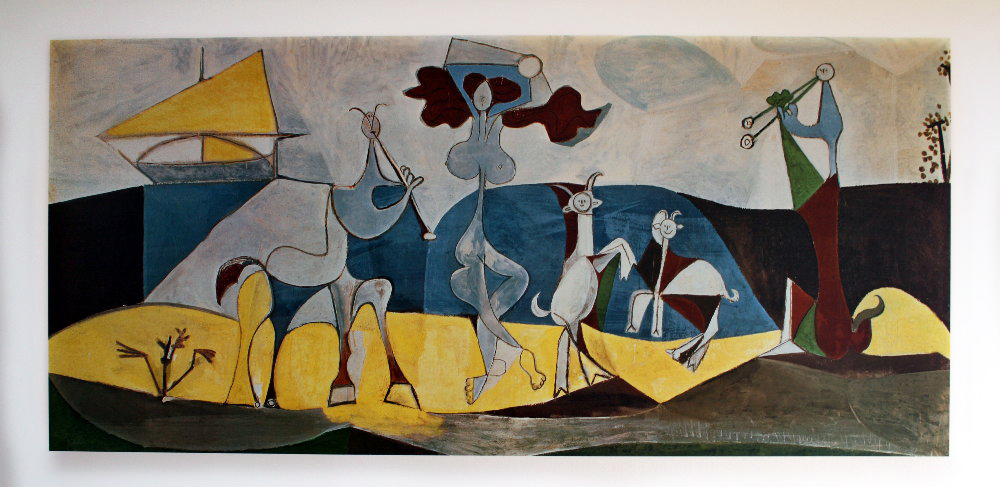
La Joie de vivre (The Joy of Living) , a year earlier, was made and remade several times, a fascinating process to document a Polish photographer friend of Picasso, Michel Sima. His images take us to the intimacy of a company that not only the famous painter's gaze seems in a trance state while working Luciferian. Also, your hands, your posture and even gladiator swollen veins of his temples testify to the state of frenzy, feverish tension, which was forged the painting. She is what its name says: a party where a centaur and a faun flutes accompany a dance nymph (traits refer to those of Françoise Gilot, the companion of the time) and jumps of joy of two goats at the edge of a sea with sandy beaches, vineyards and solar luminosity. Pagan and mythological reminiscence exudes today: the circumstances may have changed, the sets and the gods, but the joy, excitement and pleasure that life and love provided remain the same and establish a common denominator among us, whom we preceded and those who are going to happen. Permanence in time that gives the memories and reminiscences of Picasso mythological character of lived experience and actual.

